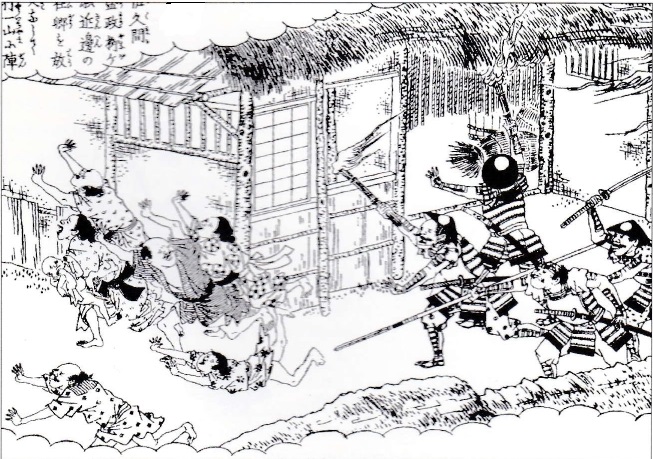
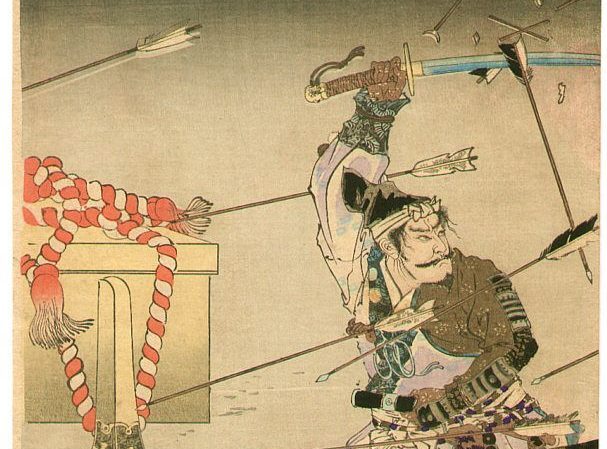
The Wolf’s Path: Ronin opens its first chapter with the Hachiman Dogs sacking a village and putting everyone to the sword; Takeshi singing a harvest tune in the midst of the carnage while arrows pass mere inches from his head. An assignment from the Asaka clan to deprive their rivals of supplies. Could something similar have occurred in the Sengoku era (excluding our protagonist’s disturbing habit, of course)?
With the exception of Hideyoshi’s invasion of Korea, there isn’t much information about the treatment of non-combatants in the Sengoku era compared to other topics.
It’s generally argued that deaths and attacks on non-combatants were less frequent because warfare was based much more on taking fortresses than walled cities, hence why more examples exist from the Korean invasion. While this is part of the truth, it’s also possible that less was written about this aspect of war in Japan.
In any case, though Japan never experienced devastation comparable to Europe’s Thirty Years’ War, the pillaging, burning, and massacres of non-combatant populations weren’t unknown in the Sengoku era, or even in earlier wars, as we’ll see below.
I customarily begin each chapter of the novel by quoting a passage from a historical or literary work. One of them is this fragment from the Shōmonki, the Chronicle of Taira Masakado, translated by Karl Friday:
He was burning the homes of Nomoto, Shida, Ōgushi, and Motoki, from the compounds of the powerful to the small houses of his followers. Those who fled to escape the flames were surprised by arrows and forced to retreat back into the fire… He then burned more than five hundred homes in the three districts of Tsukuba, Makabe, and Niihari belonging to other allies, razing each and every one of them to the ground. How sad it was! Men and women were the fodder of the flames, and valuable treasures were divided among strangers… That day the voice of the flames competed with the echoes of thunder; that hour the color of smoke battled with the clouds as it covered the sky….
The attack, though aimed at enemies, involved indiscriminate destruction. After all, “men and women were fodder for the flames.”
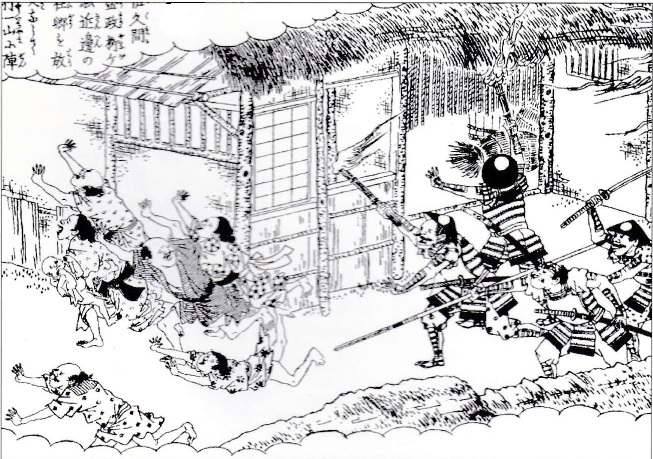
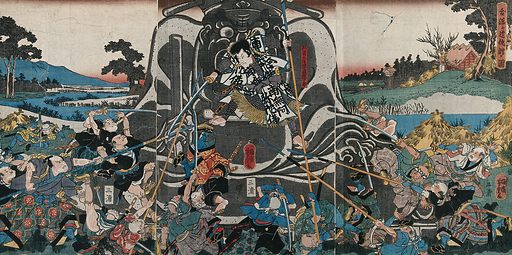
But what about the Sengoku era? An illustration like the one heading this article, which I’ll repeat below, shows Hideyoshi’s troops attacking a village.
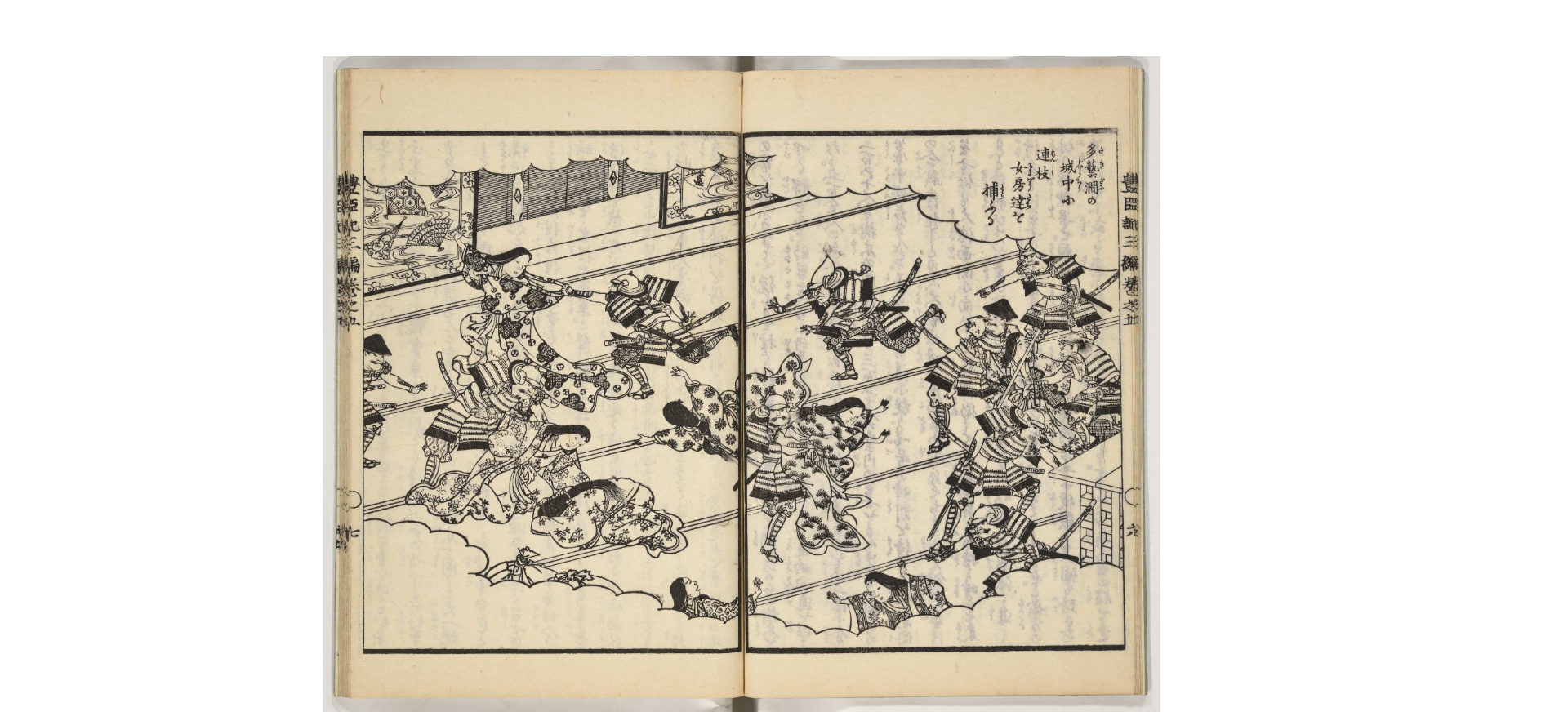
In this other one, also from Ehon Toyotomi Kunkōki (albeit a different edition) we can see that sexual violence against enemy women was far from unknown.
Finally, in Nobunaga Kōki, the Chronicle of Nobunaga, the chronicle mentions the army burning villages while advancing toward fortresses on multiple occasions, though without details. The translation is by J. S. A. Elisonas and J. P. Lamers.
After having set fire to various localities and settlements, on the 22nd of the Ninth Month he ravaged and burnt the villages located at the foot of Mount Inaba… (…)
His men set fire to the district’s outlying areas, drove the enemy into a corner, and mowed down the young barley. Here, too, an infantry encounter was fought at bowshot and harquebus range. Nobunaga reduced Kajiya Village to ashes and set up another field camp. (…)
He had a camp set up for one night and gave orders to (…) the Ōmi warrior band to set fire to all villages and settlements as far as the last valley and backwater gully.
There are too many examples in the chronicle to cite them all (even outside the conflict with ikko-ikki), but these practices clearly existed.
In summary, the different way of waging war caused fewer non-combatant deaths compared to Europe, but still left episodes that offer plausibility to the massacre with which the novel begins.


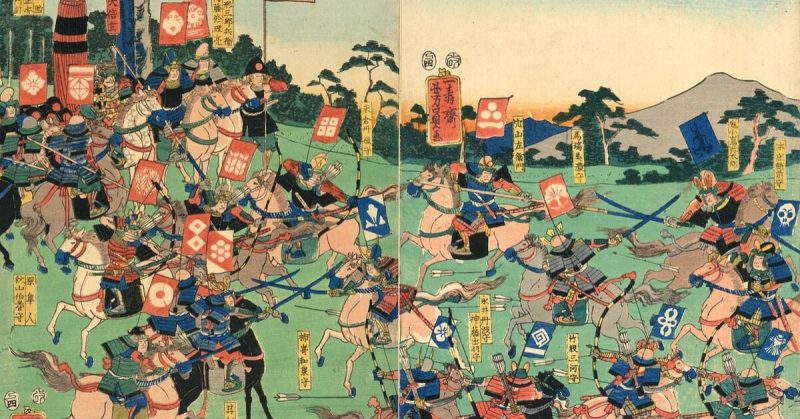
 Robert Nakamura
Leave a comment